The Surprisingly Powerful Link Between Rhythm and Reading Skills
- Thomas Matthias
- May 8
- 3 min read

At first glance, music lessons and reading ability might seem like completely separate skills. One involves notes and instruments, while the other focuses on letters and language. But research and classroom experience continue to show a fascinating connection between the two, especially when it comes to rhythm.
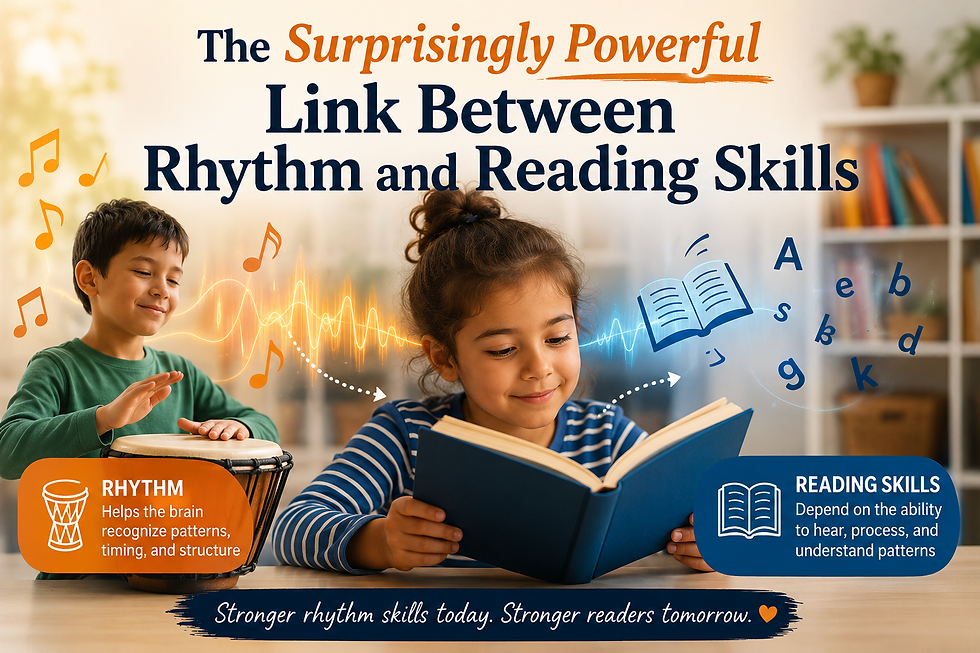
In fact, developing a strong sense of rhythm can play an important role in helping children become stronger, more confident readers.
Rhythm Is About Patterns
Reading is much more than recognising letters on a page. Strong readers learn to hear patterns in language:
syllables,
word stress,
sentence flow,
rhyme,
and timing in speech.
Rhythm in music develops these same listening skills.
When children clap a beat, copy rhythmic patterns, or keep time while playing an instrument, they are training their brains to recognise structure and sequencing. These are essential foundations for reading fluency.
Music teaches children to notice:
when sounds repeat,
when patterns change,
and how smaller parts fit into a larger whole.
Language works in a very similar way.
The Connection Between Beat and Phonics
One of the strongest links between rhythm and reading is phonological awareness, the ability to hear and manipulate sounds in words.
Before children can read confidently, they need to:
hear syllables clearly,
recognise rhyming sounds,
break words into smaller sound units,
and identify patterns in spoken language.
Rhythm activities naturally strengthen these skills.
For example:
clapping syllables in names,
tapping simple rhythmic patterns,
or chanting nursery rhymes
all help children become more aware of how sounds are organised.
This increased sound awareness often supports early phonics development and reading confidence.
Why Timing Matters
Good readers develop a natural flow when they read aloud. They pause in the right places, understand sentence rhythm, and read with expression.
Interestingly, musical rhythm helps train this sense of timing.
Children who regularly engage with rhythm activities often improve:
concentration,
auditory processing,
memory for sequences,
and overall language timing.
Keeping a steady beat may seem simple, but it actually requires the brain to coordinate listening, movement, focus, and prediction all at once.
These same processes are heavily involved in reading.
Music Builds Listening Skills
Strong reading starts with strong listening.
Rhythm exercises encourage children to listen carefully and respond accurately. Whether copying a drum pattern or matching a musical pulse, students must pay close attention to detail.
This kind of focused listening can help children:
distinguish similar sounds,
process spoken instructions more clearly,
and become more attentive communicators.
For some children, especially those who struggle with traditional literacy activities, rhythm-based learning can feel far more engaging and accessible than worksheets or repetitive reading drills.
Confidence Through Movement and Play
One reason rhythm activities are so effective is that they are active and enjoyable.
Children often learn best when they can:
move,
clap,
sing,
tap,
and physically experience learning.
Rhythm turns learning into something playful rather than pressured.
This can be especially beneficial for children who lack confidence with reading. Success in music activities often boosts self-esteem, helping children approach literacy with a more positive mindset.
Rhythm Isn’t Just for Musicians
Parents are sometimes surprised to discover that simple musical activities at home can support literacy development.
You don’t need formal music training to encourage rhythm skills. Even everyday activities can help:
clapping along to songs,
chanting rhymes,
dancing to music,
or tapping simple beat patterns together.
These playful experiences strengthen listening, timing, memory, and language awareness, all important building blocks for reading success.
More Than Just Music Lessons
The relationship between rhythm and reading highlights something important about learning: children develop skills best when multiple parts of the brain work together.
Music is not simply an “extra” subject. Rhythm training can support communication, focus, confidence, coordination, and literacy development all at once.
And perhaps most importantly, music makes learning joyful.
For many children, rhythm becomes more than a musical skill, it becomes a pathway into stronger listening, stronger language, and a lifelong love of learning.


Comments